About PtahCast
What we do
PtahCast is a delivery forecasting tool for agencies and software houses. It runs a Monte Carlo simulation against a team's real cycle time and throughput, and turns that into three honest numbers instead of one confident guess: an aggressive date, a commercial date you'd put in a contract, and a safe worst case. Alongside the forecast sits a kanban board, flow metrics, and an accountability log that keeps a permanent record of every date promised versus what actually happened.
The problem we're solving
Every agency has told a client a delivery date that was really just a guess wearing a suit. A PM eyeballs the backlog, picks something that sounds reasonable, and it goes into the SOW. There's no accounting for scope creep, sick days, or how much slower "In Review" runs than planned. When it slips, it's a surprise to everyone — including the team that gave the date.
That's not a discipline problem. It's a tooling problem. Nobody hands PMs a way to turn "here's how fast we've actually been working" into "here's what that means for this deadline." So they guess, and guessing is the only option until it isn't.
Why we built it
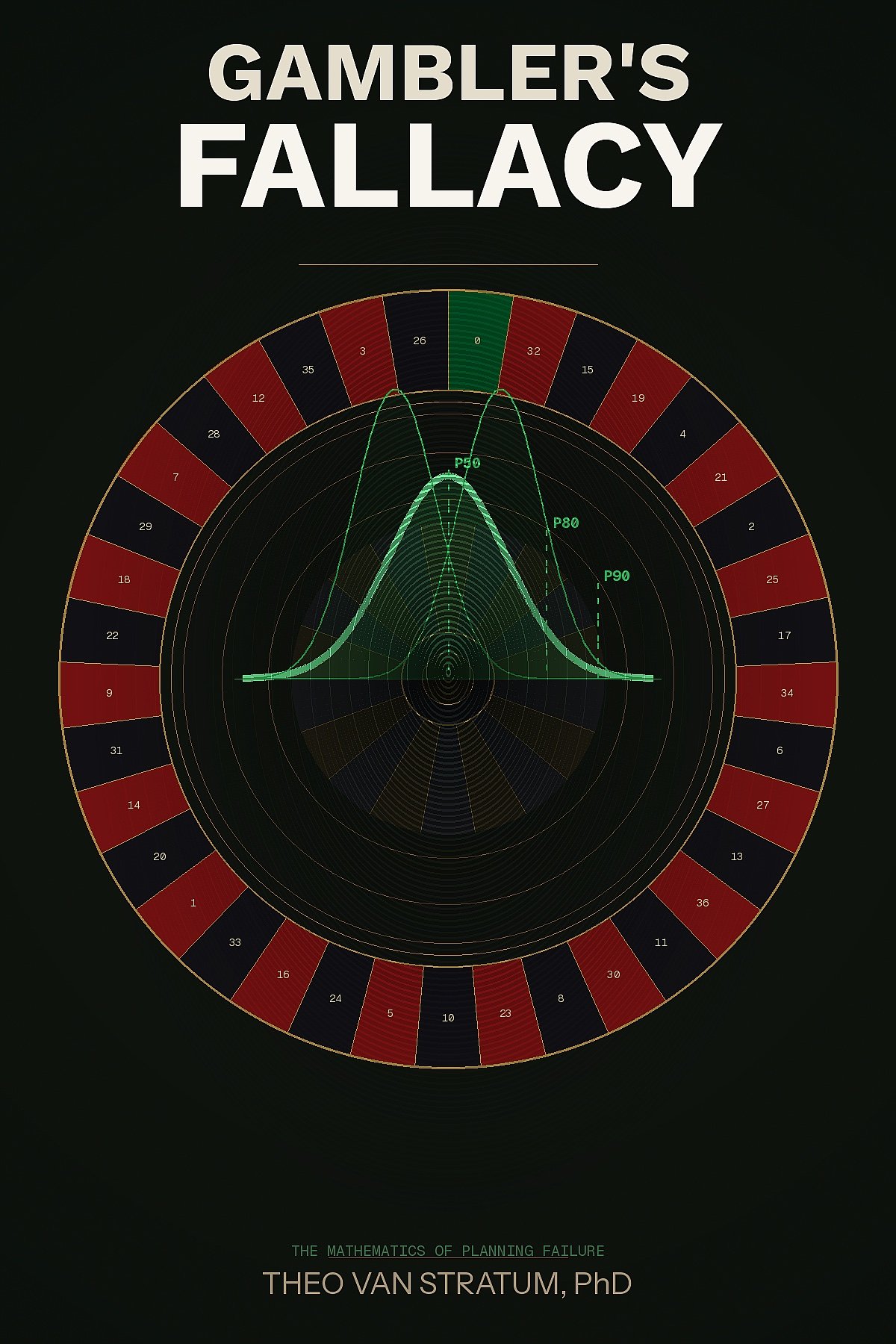
I hold a PhD in Information Technology, and I've written two books on probabilistic delivery forecasting and the gambler's fallacy as it shows up in project estimation — the mistaken belief that a string of missed deadlines makes the next one "due" to land on time, when nothing about the underlying process has actually changed.
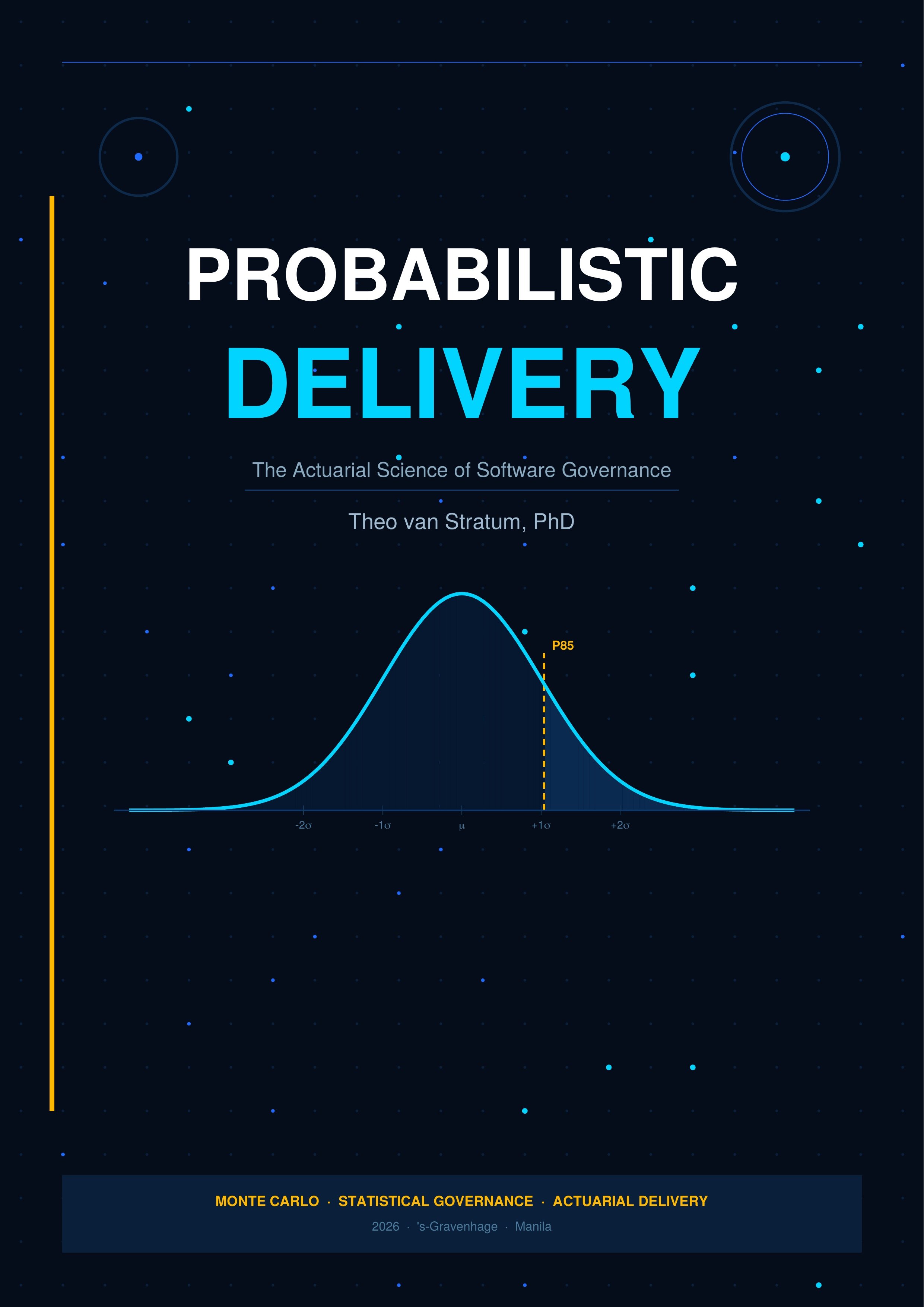
Before building PtahCast, I looked hard at the market for something that already did this well. It doesn't exist. Every project management tool tracks status — boards, timelines, burndown charts — but none of them forecast probabilistically as a first-class part of the product. Where estimation shows up at all, it's retrofitted: a Gantt chart bolted onto a kanban board, not a simulation built in from day one.
PtahCast is what I wanted to find and couldn't: a delivery tool built from scratch around probabilistic forecasting, not a task tracker with an estimation plugin added later.
Why "Ptah"?
Ptah was the ancient Egyptian god of craftsmen, architects, and builders — patron of the people who turned plans into finished, standing things. Not the god of ideas. The god of the people who actually built them, with their own hands.
That's the job PtahCast is built for. An agency is a builder too — of software, of campaigns, of client trust. PtahCast doesn't do the building for you. It just tells you, honestly and with real numbers behind it, when the thing you're building will be done.
Where we are today
PtahCast is live. The board, the flow metrics, the Monte Carlo forecast, the accountability log, and white-labeled client portals on the higher plans are all real, working parts of the product today — not a roadmap, not a mockup. We're still small and still building fast, but everything on this page is something you can sign up and use right now.
What we believe
A number is only useful if it's honest. A forecast that always looks good isn't a forecast — it's marketing. PtahCast is built to show you when you were wrong, not just when you were right.
Real data beats a good guess, every time. Ten years of PM experience doesn't beat ten thousand simulated trials run against a team's own history.
Clients trust a range more than they trust confidence. A single date with nothing behind it is easy to promise and easy to break. A dated, running record of forecasts versus outcomes is harder to fake — and that's exactly what makes it worth something.
Get in touch
PtahCast is built and run by Theo van Stratum. If you want to talk — feedback, a demo, a partnership, anything — email theo@ptahcast.com.